
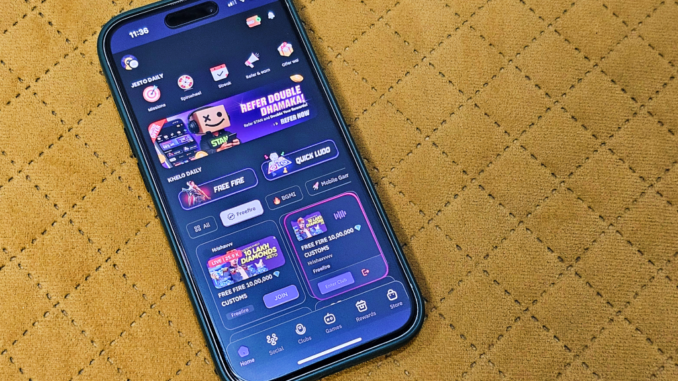
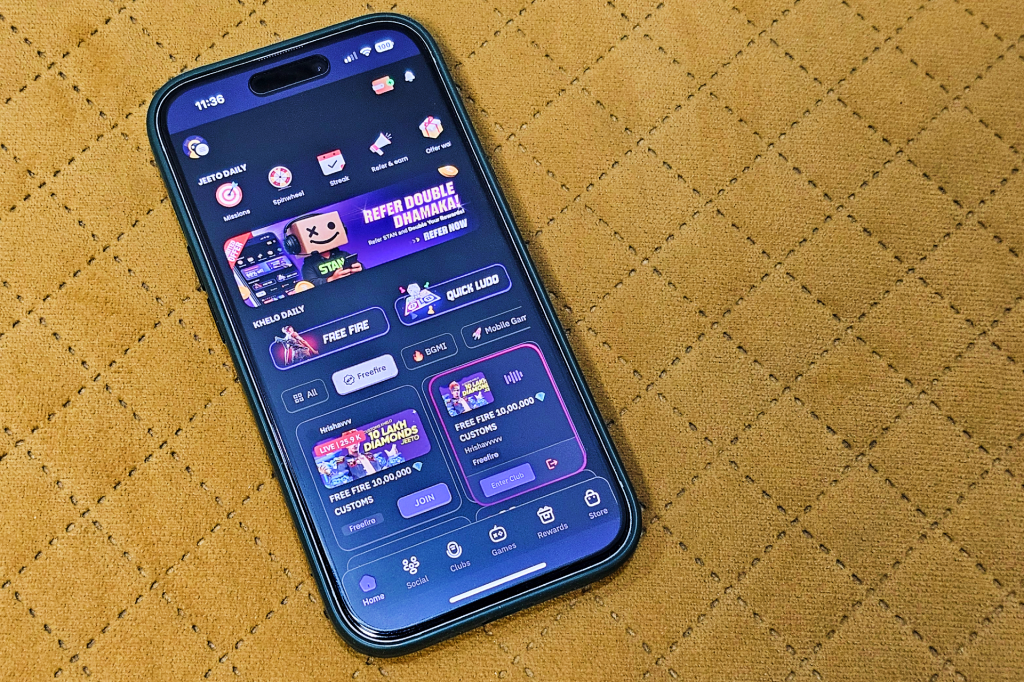
STAN, an Indian social gaming platform that connects gamers with creators, communities, and publishers, has received funding from Google.
Google’s investment is part of a $8.5 million equity funding round that also included investments from Square Enix, Bandai Namco Entertainment, and Reazon Holdings, three Japanese gaming giants. In addition, Aptos Labs, King River Capital, and General Catalyst and GFR Fund, which are already backers, participated. Google contributed to the round through its AI Futures Fund, which was established in May to assist startups using its AI tools.
Singapore-based STAN is attempting to compete with Discord as a gaming community platform, but its approach to the market is very different. STAN allows users to win casual games like Ludo and Snakes & Ladders or competitive games like Krafton’s Battlegrounds Mobile India and Garena’s Free Fire Max to earn in-app currency called “Gems.”
Additionally, creators can set up chat rooms known as Clubs, which are channels specific to each platform game. These Clubs are open to anyone, but in order to access the creators’ “gaming experiences,” members must pay a social currency. These transactions result in a commission for the startup.
However, the in-app currency, which can be exchanged for vouchers on a variety of e-commerce platforms like Flipkart, PhonePe, and Amazon, seems to be the main draw. In addition, users can earn currency through daily rewards, a spin-to-win wheel, and referrals. In contrast to Discord, where chatting or participating in communities only earns users clout, it appears that STAN’s monetization model differentiates it from the competition. STAN, on the other hand, wants to follow Discord. The company claims to have approximately 5.5 million monthly active users and more than 25 million downloads across the Play Store and App Store.
“For gamers, STAN is the place to hang out. In an interview, Parth Chadha, co-founder and CEO of STAN, described it as “a place where gamers come and make friends, play with each other, and talk to each other, sort of a fusion of social and gaming.” Chadha attributes the platform’s success thus far to its features.
To begin streaming, creators were initially required to get in touch with the company’s staff; however, the startup made it possible for anyone to go live last year when it opened the platform to user-generated content.
According to the CEO, that change increased engagement and downloads.
Additionally, STAN collaborates with game studios, publishers, and developers, such as Roblox, Krafton, and Garena, who pay the startup to connect them with gamers and creators on the platform.
According to Chadha, who spoke with TechCrunch, the platform has attracted more than 20 new game studios and publishers each month, and nearly 100 game publishers have joined in the past two quarters.
He stated, “That is turning into a very interesting business stream right now.” STAN intends to use Google’s backing to use AI to improve moderation going forward.
According to Chadha, AI already handles 70% to 80% of STAN moderation. The remainder is managed by a human moderation team, but the startup plans to further reduce that by using AI.
Additionally, STAN aims to bring AI-powered toolkits for creators, including the ability to produce avatars and memes, as well as tools for quick replies and filtering out chats.
He stated, “We and the Google team are working together to leverage and scale the business, there are a lot of interesting plug-and-play models.” STAN is not the first startup from India to receive funding from Google’s AI Futures Fund.
Toonsutra, a startup that uses AI to power an immersive comic-reading experience, wins this distinction. Toonsutra, STAN, Pixxel, and Adda247 are just a few of the Indian startups in which Google has confirmed to TechCrunch that it has invested more than $5.5 billion.
Despite the fact that STAN’s app is currently restricted to India, the platform still receives 5 to 6 percent of its engagement from users outside of India, who frequently use Indian phone numbers and accounts to access it. The company intends to expand internationally over the next year, beginning with the Indian subcontinent and moving on to Southeast Asia and Latin America.
According to the CEO, the startup made money for a few months before deciding to spend some money on expanding. He continued, “Now it aims to achieve profitability in 2027.” The startup currently has 40 employees, of which fewer than 30 are employed in product engineering.
STAN now has approximately $15 million in equity funding, thanks to this increase.