


High fidelity audio equipment is recognized for its correspondingly high cost, rendering audiophilia a rather costly pastime. However, the ability to spend significant sums of money does not imply that one must do so, nor that it is advisable. In fact, some of the most practical devices that every audiophile ought to have on hand are also among the least expensive.
Even if you possess a Hi-Fi system, there are numerous accessories that can enhance its sound quality. Additionally, there are products that can help sustain a high standard of audio quality wherever you may be, as your loudspeakers are fixed and limited to a specific room. As a lifelong audiophile who became enamored with high-fidelity audio at an early age, I have never had the financial means to extravagantly invest in my audio setup, instead acquiring equipment gradually over many years. Throughout this journey, I have discovered a variety of gadgets that have improved and simplified my audio experience. I have compiled a selection of these here.
Whether you are new to high fidelity audio or have committed yourself to the hobby for many years, these gadgets are certainly worth considering. From dongles that enhance your mobile audio to cables that mitigate noise, and even protective solutions for your collection, there is something available for everyone. Here are six budget-friendly gadgets that every audiophile should have in their home.
Contents
- 1 A USB-C DAC dongle ensures your music remains clear while you are on the move
- 2 Shielded and balanced audio cables ensure that your music remains free from interference
- 3 Effective ear protection is remarkably affordable — and it is essential
- 4 A USB-C dongle can enhance your devices with near-lossless Bluetooth codecs
- 5 Cloud and local storage safeguards your music library
- 6 Get over yourself and invest in some wireless earbuds
A USB-C DAC dongle ensures your music remains clear while you are on the move
To utilize your phone for high-fidelity audio, it is essential to have a DAC (digital audio converter) to achieve the best quality with wired playback devices. There is ongoing debate among audiophiles regarding the actual benefits of standalone portable DACs. Personally, I find that the impractical design outweighs any minor enhancements in audio quality, not to mention the cost involved. Unless you are using high-impedance headphones while out and about, it is advisable to opt for an affordable DAC on a string and be done with it.
Nearly any low-cost USB-C dongle is equipped with a DAC that sufficiently powers the majority of headphones or IEMs. I have had positive experiences with the Ugreen USB-C to 3.5mm Audio Adapter, which boasts a sample rate of 32-bit/384kHz. This level of fidelity surpasses that of almost any recording an audiophile is likely to possess. Additionally, I have been satisfied with a random USB-C to 3.5mm Headphone Adapter from an obscure Amazon brand named Wkwzy. It features the same sample rate of 32-bit/384kHz and is slightly more affordable than the other option.
I always keep one DAC dongle in my vehicle, another in my backpack, and a third on my desk. They are so inexpensive and practical that I prefer to have one within easy reach. Besides being excellent for streaming music from your phone, they also outperform the built-in DACs found in some laptops.
Shielded and balanced audio cables ensure that your music remains free from interference
Audiophiles possess as many superstitions as a medieval peasant, and we are notorious for our tendency to waste money on auditory snake oil. Nevertheless, one aspect where audiophiles are correct is the necessity for shielded cables. Various forms of interference can infiltrate your audio stream via your cables (if you require evidence, hold your phone close to the audio cables connected to your loudspeakers while making a phone call). The noise typically originates from electromagnetic interference, which surrounds us, particularly for those of us with numerous technological devices at home. Shielded cables function like a Faraday cage, effectively blocking that noise.
Another method to maintain a clean audio stream is through balancing. In the context of a cable running from the left or right channel of a mixer or interface to the corresponding loudspeaker in a stereo configuration, balanced cables utilize a grounding wire and an audio conduction wire, in addition to a third wire that reverses the polarity of the audio signal. The underlying science is intriguing, but the simplified explanation is that any noise introduced into the audio stream is canceled out. When setting up your loudspeakers, it is advisable to look for cables that are both balanced and shielded.
My personal preference is the Mogami Gold cables, which cost approximately $90 for a 10-foot cable. If that price is a bit steep for you, I have also had positive experiences with Hosa’s Balanced Interconnect cables. They are priced around $30 for a pair of 10-foot cables, although they frequently go on sale for much less. For additional recommendations, consult audiophiles who may be displeased with my selections. They will undoubtedly have their own suggestions.
Effective ear protection is remarkably affordable — and it is essential
To be an audiophile, maintaining good hearing and possessing an analytical ear is crucial. Subjecting your ears to loud concerts can lead to gradual hearing loss, thus it is wise to invest in high-quality earplugs that lower the volume at events without compromising sound quality. Numerous companies offer such products, and I have personally tested both the Loop Experience 2, which is popular among the Instagram crowd, and Eargasm High Fidelity Earplugs, which are more tailored to ravers like myself.
Both brands assert that they evenly attenuate sound across the frequency spectrum; however, the Eargasms feature a transparent design that showcases an attenuation wire running through the center, while I am not inclined to dismantle my Loops for experimental purposes. The manufacturer claims that the Loop Experience 2 earplugs incorporate a mesh at the end of an acoustic channel, which presumably disperses sound waves before they reach your eardrums.
In practice, I observe that the Eargasms offer a greater level of noise reduction, whereas the Loops deliver a slightly clearer sound. From the front row at EDM concerts, distinguishing between the two without a direct comparison is challenging. Either option significantly diminishes the overwhelming bass that can be felt when a dubstep DJ decides to unleash 18 of his own HSD Battleaxe speakers at the event.
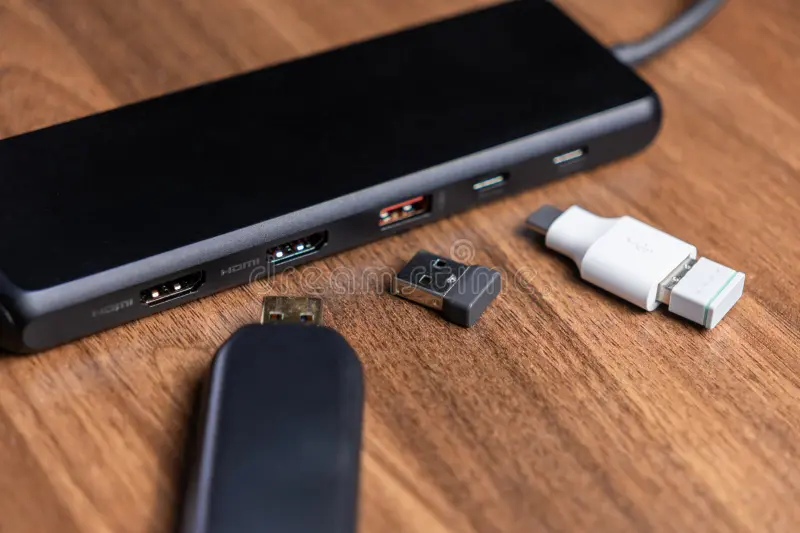
A USB-C dongle can enhance your devices with near-lossless Bluetooth codecs
If you are an audiophile using an iPhone, you may know that Apple devices do not support high-resolution Bluetooth codecs. A codec is the technology responsible for compressing and decompressing audio streams. iOS is limited to SBC and AAC, which have maximum bit rates of 328 and 320 kbit/s, respectively. This limitation confines you to a highly compressed wireless audio stream, which diminishes the quality of any lossless audio source. This is one reason many audiophiles regard Bluetooth audio with skepticism. In contrast, Android users benefit from support for Qualcomm aptX and Sony LDAC. Although these high-resolution codecs do not achieve true losslessness, they come very close in optimal conditions. Windows devices also lack LDAC support and exhibit inconsistent aptX compatibility.
Nevertheless, there exists a comprehensive solution that is compatible with nearly all devices equipped with audio output capabilities and a USB-C port: an audio adapter dongle. It is important to note that I have not personally tested these devices, as all my wireless playback devices are compatible with codecs like aptX and LDAC. One available option is the Fiio BT11, priced at approximately $50, which connects to your phone or computer via USB-C. You can easily link your high-quality wireless headphones to the receiver. This dongle supports the highest quality aptX Lossless and LDAC, in addition to Bluetooth Low Energy for enhanced stability, which should result in less frequent downgrades to lower quality streams. Another option that has emerged is the Questyle QCC Dongle Pro, which features LDAC, aptX Lossless, and additional codecs for $120.
Cloud and local storage safeguards your music library
Audiophiles often prioritize our playback devices, yet our music collections hold equal significance. If you are engaging with digital audio (which is advisable, as it is the sole method for achieving bit-perfect replication), you likely possess a collection of FLAC and WAV files. Without backups of these files, they will vanish the instant something malfunctions with your computer or media player. Therefore, it is prudent to maintain backups of your music on an external drive — and also in the cloud, for added security.
I have found Google Drive to be effective for syncing my audio files, as I can easily configure it to back up the music folder on my computer. However, cloud storage carries risks. What if Google’s servers experience an issue that inadvertently deletes your files? What if you mistakenly remove your music folder and Google Drive opts to sync that alteration? It is advisable to also back up your music on an SSD.
My preferred choice for external SSD storage is the Samsung T9. It is a reliable drive that I depend on for backing up my writing, videos, and music, among other data. Even with large, lossless music files, most individuals do not exceed a terabyte of music, so you should consider acquiring a 1 TB version of the T9 for under $140 at the time of this writing. Steer clear of the least expensive flash storage, as the longevity of a USB drive is frequently linked to the quality of its production. Regrettably, the price of SSD storage is becoming increasingly burdensome due to AI, which is elevating demand, so now is the opportune moment to purchase if you lack a backup drive for your music.
Get over yourself and invest in some wireless earbuds
Indeed, we are all aware that they cannot compare to a multi-thousand dollar loudspeaker system in a professionally treated space, but here is the reality: You cannot carry loudspeakers in your pocket. Additionally, wireless earbuds have significantly improved in sound quality in recent years. Unlike a $10,000 DAC, you can take them to the gym, and unlike your $500 wired in-ear monitors, they can withstand a bit of rain without failing immediately.
After evaluating numerous earbuds, my top recommendation is the Samsung Galaxy Buds3 Pro. Their expansive soundstage, compatibility with 24-bit/96kHz audio via SSC, and close alignment with the Harman curve make them excellent for listening to music, watching movies, or enjoying podcasts. If you lean towards a more analytical audio profile, consider the Sony WF-1000XM5, which can be adjusted to a nearly flat response with some equalization. As long as you are aware of your preferred sound signature, you will be able to discover outstanding earbuds that deliver music well enough to meet your needs while on the move. Place those earbuds in your ears, acknowledge that they sound sufficiently good, and reconnect with nature.